Every Child Needs a Place to Play.
Great programs need coaches. Children also need something even simpler: safe, usable places where they can meet friends, bring a ball, practice and play.
Funding for Places to Play helps expand the spaces, equipment and usable hours that keep sport accessible inside the community.
Give children more places to just show up and play.
Public fields, courts and flexible mini-spaces support informal practice, friendship and movement alongside organized programs. Community funding can increase usable hours, equipment or infrastructure—but only when there is a viable site and public-use arrangement.
Opportunity Needs Somewhere to Happen.
Not every sports experience needs a team, a registration fee or a season-long commitment.
Children also develop by playing informally: practicing with friends, trying new skills, joining a pickup game or simply having somewhere safe to be active.
But even informal play depends on access: available courts and fields, usable hours, working equipment, lighting and spaces designed for children to actually use them.
Philanthropy can help make existing public assets more usable and create new community play capacity where it is needed.
In Aspen Institute Project Play’s 2026 national youth survey, 47% of young people who had never played organized sports said they would prefer a public sports facility if they joined.
Aspen Institute Project Play · National Youth Survey (April 2026) ↗Elias.
Elias loves sports. But he does not always want another team, another schedule or another registration.
Sometimes he simply wants to meet his friends, bring a ball and play.
That kind of play matters too. It gives children room to experiment, practice, connect with friends and enjoy sport on their own terms.
Two Projects. More Places to Play.
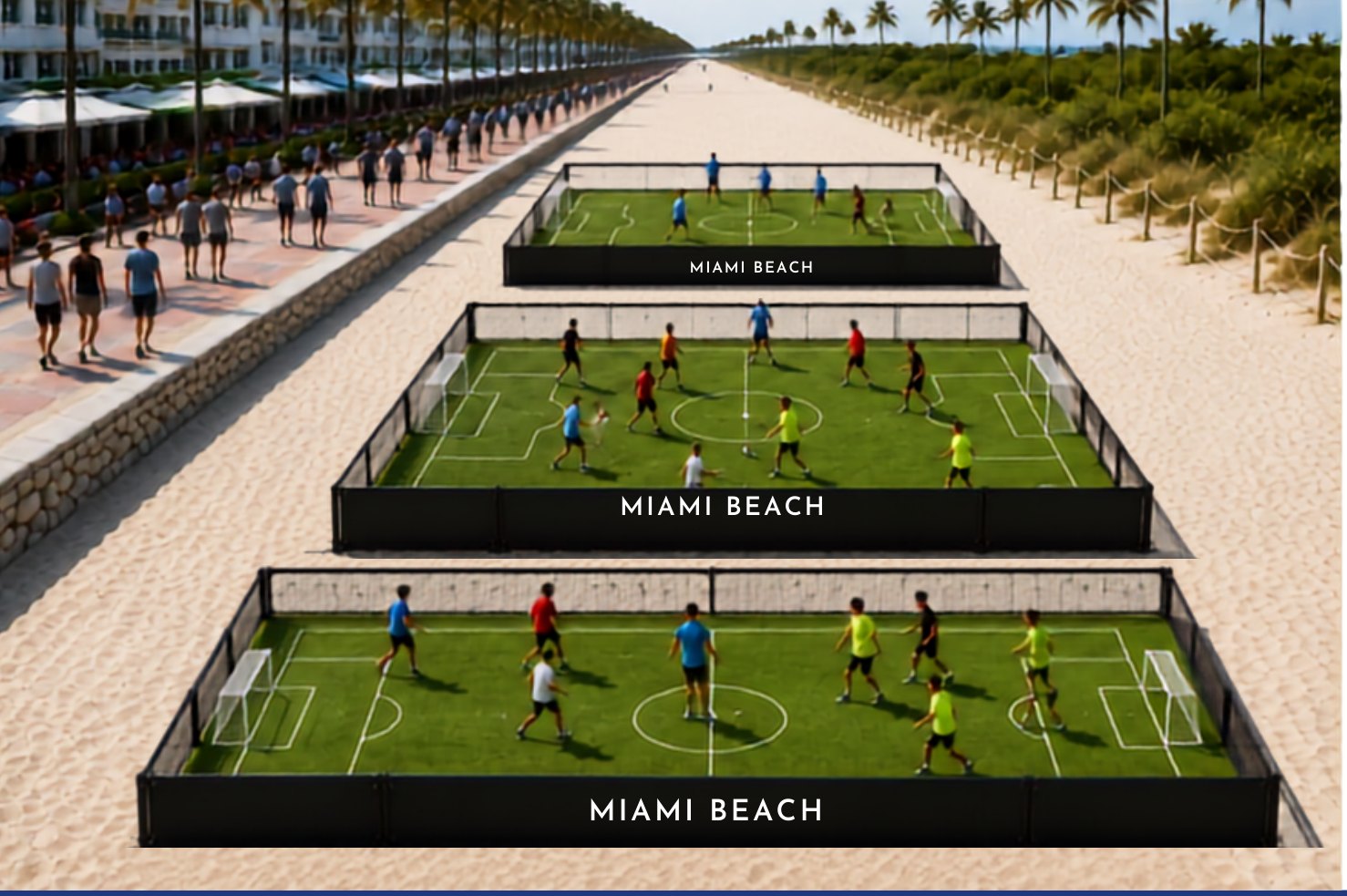
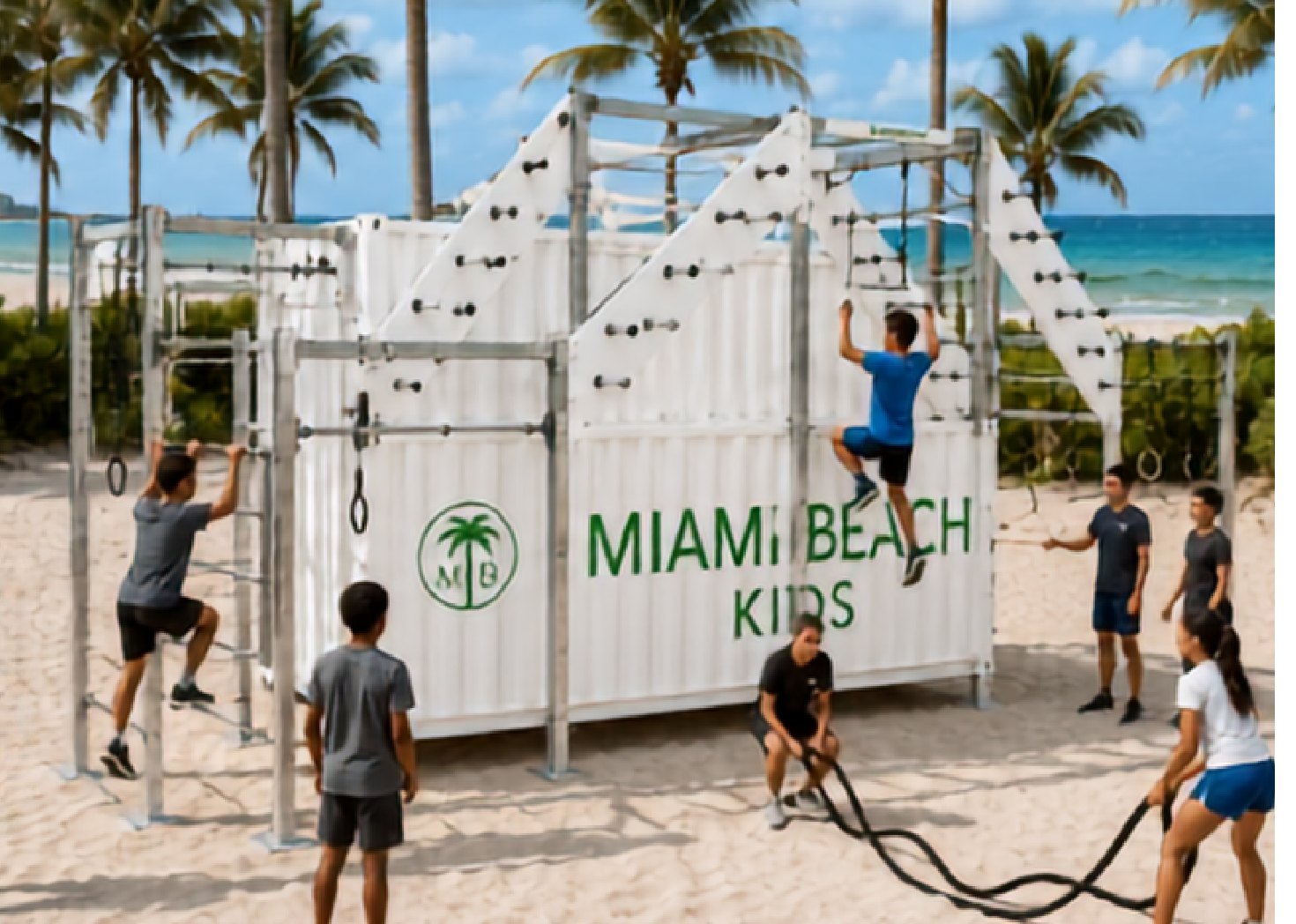
MBYSF is seeking philanthropic and corporate partners for two proposed public-space projects in Miami Beach: micro soccer courts on Ocean Drive and dedicated youth fitness hubs at Muscle Beach and Altos Del Mar Park.
These are proposed community funding concepts, not approved construction projects. Final scope, site permissions, installation costs, City responsibilities and public access arrangements must be agreed before implementation.
Both concepts are intended to expand places where children and families can be active close to home. Donations can support a complete facility or form part of a larger pooled project commitment.
Small Courts.
Big Community Impact.
3 proposed courts · $180,000 combined base estimate, plus installation
Proposed permanent micro soccer courts would create a public destination for pickup play, skill-building, family activity and community programming.
Designed for children and families of different ages and abilities, with free and low-cost opportunities as described in MBYSF's concept.
Proposed delivery model: MBYSF fundraises, helps implement and activate, then donates the completed improvements; public ownership, maintenance and access would be determined with the City of Miami Beach through the necessary approvals and cooperative agreement. Project status, locations, design and budget remain subject to review. Any donor recognition would require applicable City approval.
Outdoor Fitness.
For the Next Generation.
2 proposed fitness hubs · $200,000 combined base estimate, plus installation
Dedicated youth fitness destinations would complement Miami Beach's existing adult fitness spaces and create opportunities to build strength, confidence and healthy habits.
Proposed activation includes obstacle training, strength and conditioning, run clubs, girls fitness and community wellness activities.
Proposed delivery model: MBYSF fundraises, helps implement and activate, then donates the completed improvements; public ownership, maintenance and access would be determined with the City of Miami Beach through the necessary approvals and cooperative agreement. Project status, locations, design and budget remain subject to review. Any donor recognition would require applicable City approval.
Every Gift Can Make More Play Possible.
Alongside the two distinct capital concepts, smaller funding commitments can expand play through equipment, access hours and upgrades. The micro-space item below also shows how to contribute toward one or all three proposed soccer courts; the youth fitness hub remains a separate project above.
Fund portable goals, balls, nets, cones and other equipment that can turn available space into an active play environment.
Support staffing, supervision or other operating needs that help make existing spaces available to children for additional community play.
Help refresh smaller courts or play areas so existing community infrastructure becomes more functional, inviting and usable.
Support lighting or related improvements that can extend the usable hours of an existing field, court or play area.
Support the proposed micro soccer courts at an estimated $60,000 per court or $180,000 for three, before installation. Other multi-sport configurations would require separate design and pricing.
Support larger improvements that can make outdoor play more practical across more hours and more of the year.
What Funding Places to Play Makes Possible.
The objective is not simply to purchase equipment or improve a physical asset. It is to translate that funding into more actual opportunities for children to play.
Extend the times when community spaces can safely be used by young people.
Create opportunities to play without always requiring registration, a roster or a full-season commitment.
Improve existing assets or add new space so more children can be active locally.
Invest in spaces that can support children, families, coaches and community play.
What your gift changes.
What it actually funds.
The budget is a defined proposal—not a promise that every planned outcome has already been achieved. Before a donor commits, MBYSF and the implementing partner can confirm the final scope, funding designation and intended measures of success.
What the gift covers
Current priority concepts: three Ocean Drive micro soccer courts at approximately $60,000 each and two youth fitness hubs at approximately $100,000 each, plus installation. Smaller funding commitments remain possible.
What the model means
Each unit estimate is preliminary and excludes installation: $60,000 per proposed micro soccer court and $100,000 per proposed youth fitness hub. Site feasibility, permits, design, City review, final installation budgets, public ownership and long-term maintenance terms remain to be agreed. Neither project is represented as approved.
What happens after
Agree the approved site, funding designation, City ownership and maintenance responsibilities, public access schedule, delivery partner and usage measurements before a capital commitment proceeds.
Funds with related purposes are coordinated across the MBYSF portfolio. Each eligible cost and resulting participant outcome is recorded once, even if it advances more than one mission pillar.
Public Space. Community Investment. More Opportunity.
Miami Beach already has valuable public fields, courts, parks and recreation infrastructure.
MBYSF's role is not to replace that public system. It is to help attract nonprofit and private-sector resources that can make existing assets more useful or help address identified gaps.
When a need is identified, MBYSF can help bring together donors, partners, equipment, expertise and community support around a practical solution.
Your Impact Should Create More Play.
Donor reporting should connect the funded project to the community benefit it was intended to create.
Track equipment purchased, improvements completed or new play infrastructure delivered through this funding.
Where applicable, track additional hours of community access created through funded improvements.
Where practical, track participation and the number of young people benefiting from the space.
Track opportunities for children to use the space without requiring a team registration or significant participation fee.
Look at whether courts, fields or equipment are being used as intended across the community.
Use participation and community feedback to understand where additional hours, equipment or play spaces may be needed.
How your support makes a difference.
What we deliver. What changes for children.
These are proposed measures to agree with each donor and implementing partner. Actual results will be reported separately from projections, and duplicate registrations or activities will not be presented as unique children served.
Outputs / what we deliver
- Equipment, facility improvement or open-play hours actually delivered
- Site approvals, operating agreements and accessibility criteria
- Public-use schedule and project costs against approved scope
Outcomes / the difference
- Added free or low-barrier hours for local children
- Use of the new or refreshed space where measurable
- Improved ability to play informally and without club enrollment
Want to Dive Deeper?
Community-based youth sports depend not only on organized programs, but on accessible places where children can be active, play informally and build a lasting relationship with movement and sport.
Places to Play: BE PART OF THE CHANGE.
Create safe, convenient hours and spaces for the everyday freedom to play. This funding supports one part of the child-first, community-powered alternative to pay-to-play.
WHAT THIS FUNDS
Fund a practical child-first outcome with a clear purpose.
HOW YOU CAN PARTICIPATE
Select appropriate participation or recognition, if any, that safeguards families.
WHAT WE MEASURE
Agree on use-of-funds updates, delivery outputs and relevant child outcomes.
Make More Space for Childhood to Happen.
Children need programs, coaches and pathways to develop. They also need places where they can simply play.
Our immediate concepts are three Ocean Drive micro soccer courts and two youth fitness hubs at Muscle Beach and Altos Del Mar Park. Together, they offer a way to invest in public play capacity that could serve families across generations.